About Emerson
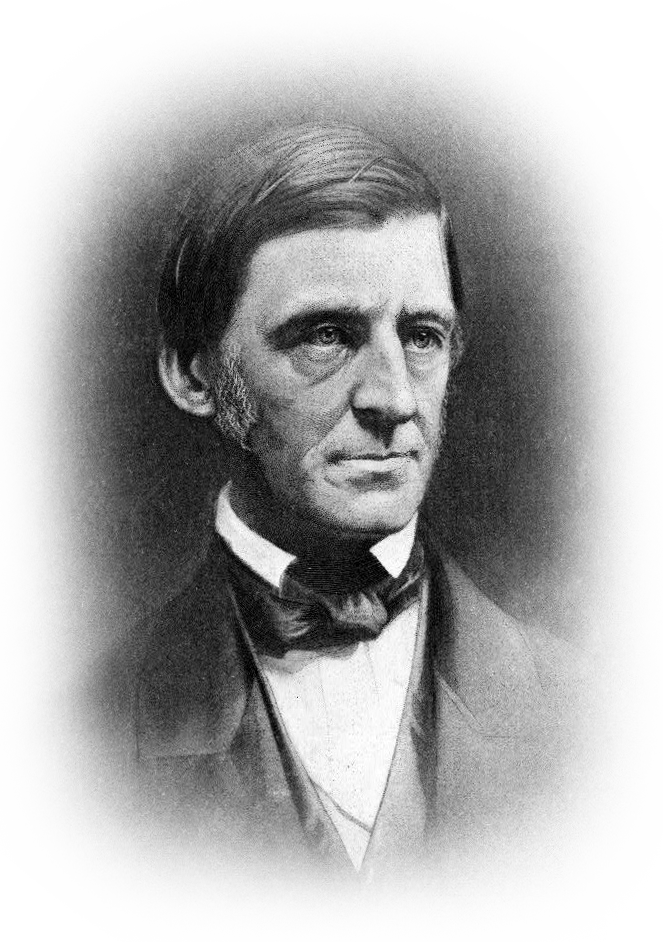
The name of this academy comes from Ralph Waldo Emerson, chosen for a reason closer to home than it might first appear.
Long before he became the philosopher of self-reliance, Emerson was a Latin student himself. He entered Boston Latin School at nine, went on to Harvard at fourteen, and spent his formative years inside exactly the kind of classical formation this academy still offers. The man who later argued that a mind's own judgment matters more than any inherited authority spent his boyhood immersed in inherited authority: declensions, conjugations, the Roman canon, memorized and mastered years before he was old enough to question any of it.
He never disowned that formation. Later in life, writing on education, he argued that it is better to teach a child Latin grammar than rhetoric or moral philosophy, because grammar "requires exactitude of performance," a discipline that can be checked, gotten right or wrong, in a way looser subjects cannot. By that he meant something specific: a Latin ending is either correct or it is not, checkable in a way a debate about ethics or an essay's rhetoric rarely is. A student learns, early and often, exactly where he stands, right or mistaken, with no room to drift by on a vague impression. That habit of mind, once built, does not stay confined to Latin. A man who merely happened to study Latin as a boy might have said something like this in passing. Emerson said it having lived on both sides of the question, as the boy once drilled in paradigms and as the philosopher who spent his life arguing that a mind's own judgment is what ultimately matters.
Self-reliance, on Emerson's own account, was never the alternative to discipline. It is what discipline becomes, in a mind strong enough to survive it.